
Blog
TPM 2.0 in Industrial PCs Firmware TPM vs. Discrete TPM
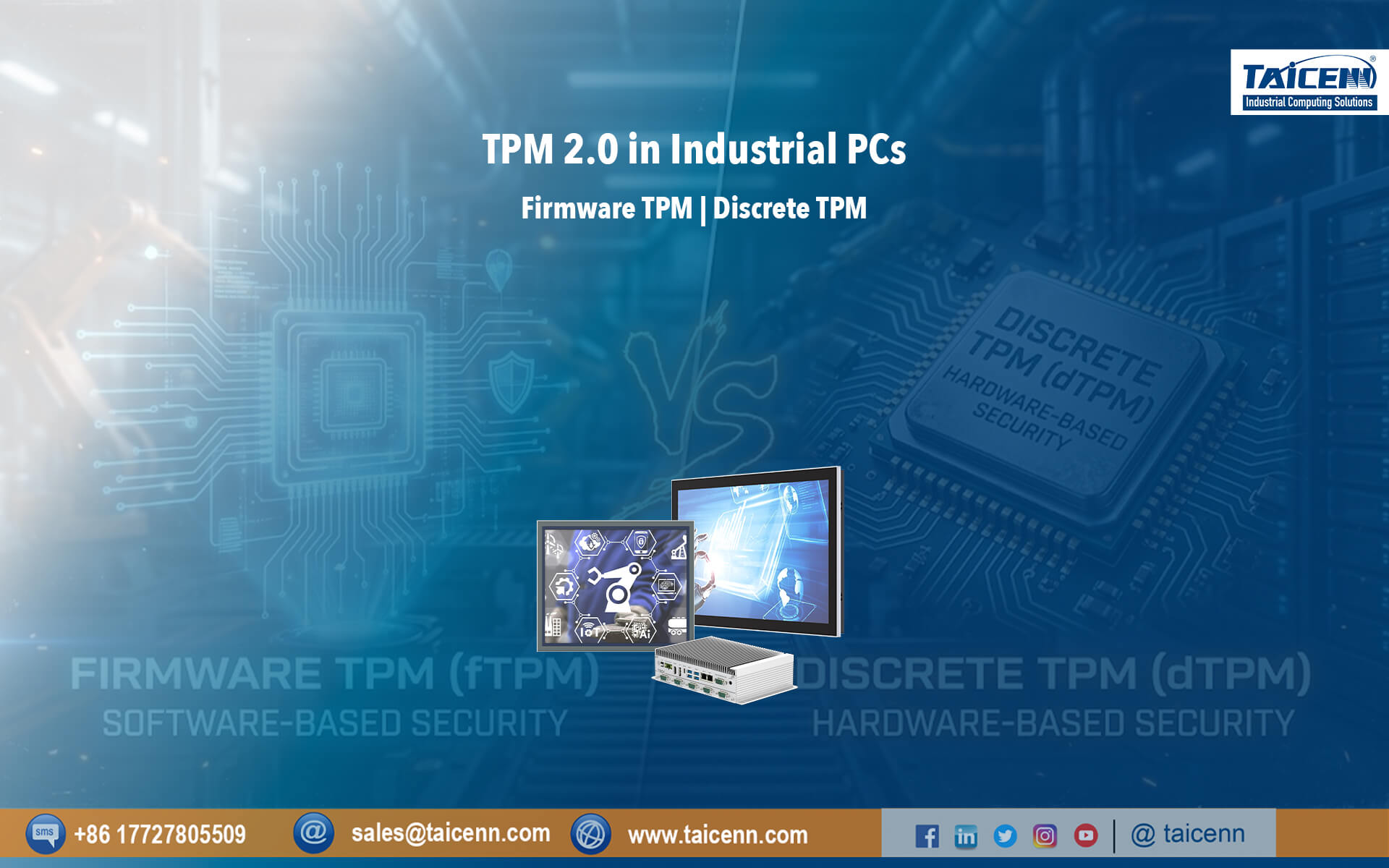
Security is becoming an increasingly important requirement for Industrial PCs used in automation, edge computing, and connected industrial systems. TPM 2.0 is one of the security features frequently specified in industrial computer projects.
However, “TPM 2.0 support” does not necessarily mean that a discrete TPM chip or module is physically installed on the motherboard.
There are two common approaches: Firmware TPM and Discrete TPM.
What Is TPM 2.0?
TPM, or Trusted Platform Module, is a security technology designed to provide hardware-based security functions for protecting encryption keys, authentication credentials, and system integrity.
TPM 2.0 can be used for functions such as:
Secure key storage
Platform integrity verification
Secure Boot-related security functions
Device authentication
Cryptographic operations
Operating system security features
For Industrial PCs, TPM 2.0 may also be part of the requirements for modern operating systems and security policies.
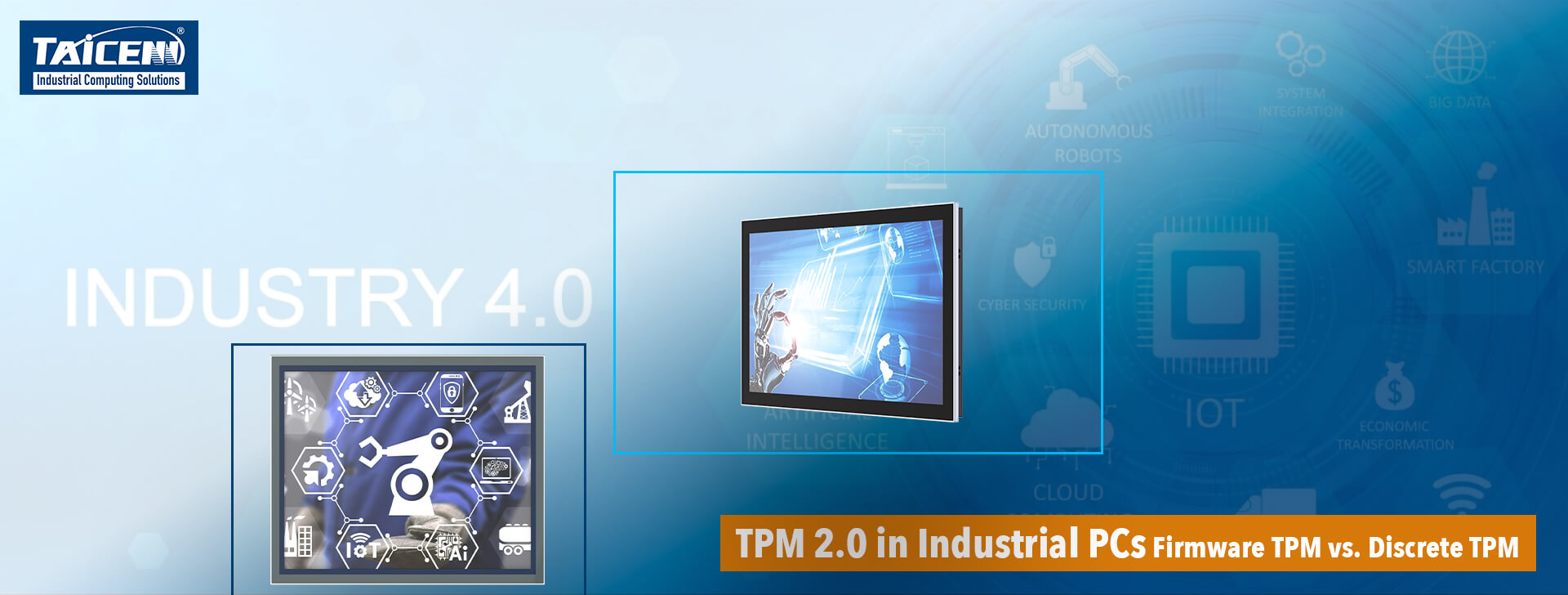
Firmware TPM vs. Discrete TPM
TPM 2.0 can be implemented in different ways.
Firmware TPM
A Firmware TPM is implemented through platform firmware and supported by the processor and chipset architecture. For Intel-based systems, Intel Platform Trust Technology (PTT) can provide TPM 2.0 functionality without requiring a separate physical TPM module.
This approach can simplify the hardware design while still providing TPM 2.0 functionality supported by the platform.
Discrete TPM
A Discrete TPM uses a dedicated physical TPM chip installed on the motherboard.
The TPM has its own hardware security functions and communicates with the system through a dedicated interface.
This approach may be preferred when a project specifically requires a physical TPM device or has particular security and certification requirements.
Which One Should You Choose?
The appropriate solution depends on the application and security requirements. The key consideration is not simply whether the system supports TPM 2.0, but how TPM functionality is implemented and whether the implementation meets the project’s security, compliance, and certification requirements.
For many standard Windows-based Industrial PCs, Firmware TPM may provide the required TPM 2.0 functionality without adding a discrete module.
A Discrete TPM may be more appropriate when the project specifically requires:
A physical TPM device
Particular security architecture
Specific certification requirements
Dedicated hardware-based security requirements
The choice should therefore be based on the customer’s actual security requirements rather than simply checking whether “TPM 2.0” appears in the specification.

TPM 2.0 Support from TAICENN
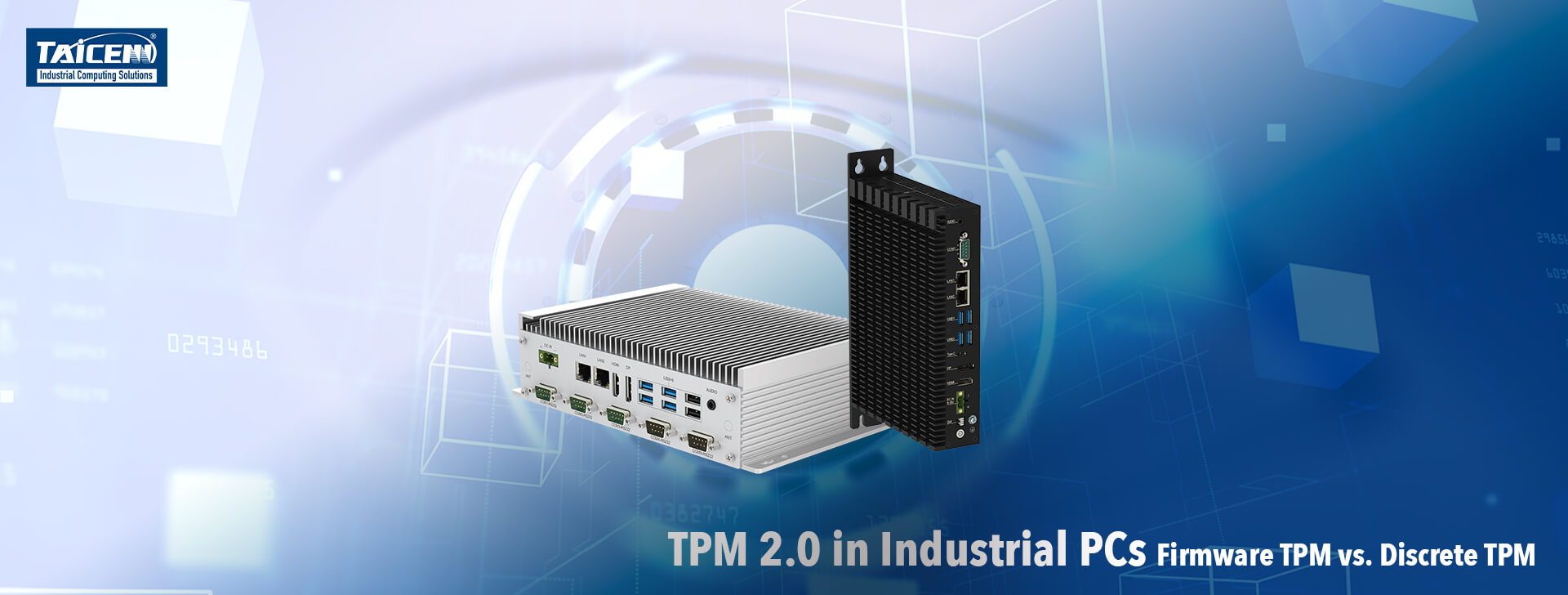
TAICENN provides industrial computing solutions with TPM 2.0 support across selected Intel-based Industrial PCs. Depending on the processor platform and motherboard design, TPM 2.0 functionality can be implemented through Intel Platform Trust Technology (PTT), providing a firmware-based security solution without the need for a separate discrete TPM module.
For customers with specific security requirements, TAICENN can evaluate the complete system configuration, including the processor platform, BIOS, motherboard design, TPM implementation, operating system, and other security requirements. This helps ensure that the selected Industrial PC meets the technical and security requirements of the target application.
TAICENN provides Industrial Panel PCs, Industrial Box PCs, and Industrial Monitors for industrial automation, edge computing, SCADA, IIoT, and other demanding applications. Based on the project requirements, TAICENN can support customers in selecting the appropriate TPM implementation and Industrial PC configuration for their application.
Whether a project requires standard TPM 2.0 functionality through Intel PTT or a specific hardware-based security configuration, TAICENN works with customers to evaluate the appropriate platform and configuration based on their technical and security requirements.
Conclusion
TPM 2.0 is an important security feature for modern Industrial PCs, but TPM 2.0 support does not automatically mean that a discrete TPM module is installed.
Firmware TPM, such as Intel PTT, and Discrete TPM are different implementation approaches.
Understanding this distinction helps customers specify the right Industrial PC configuration and avoid confusion during hardware selection and project validation.